
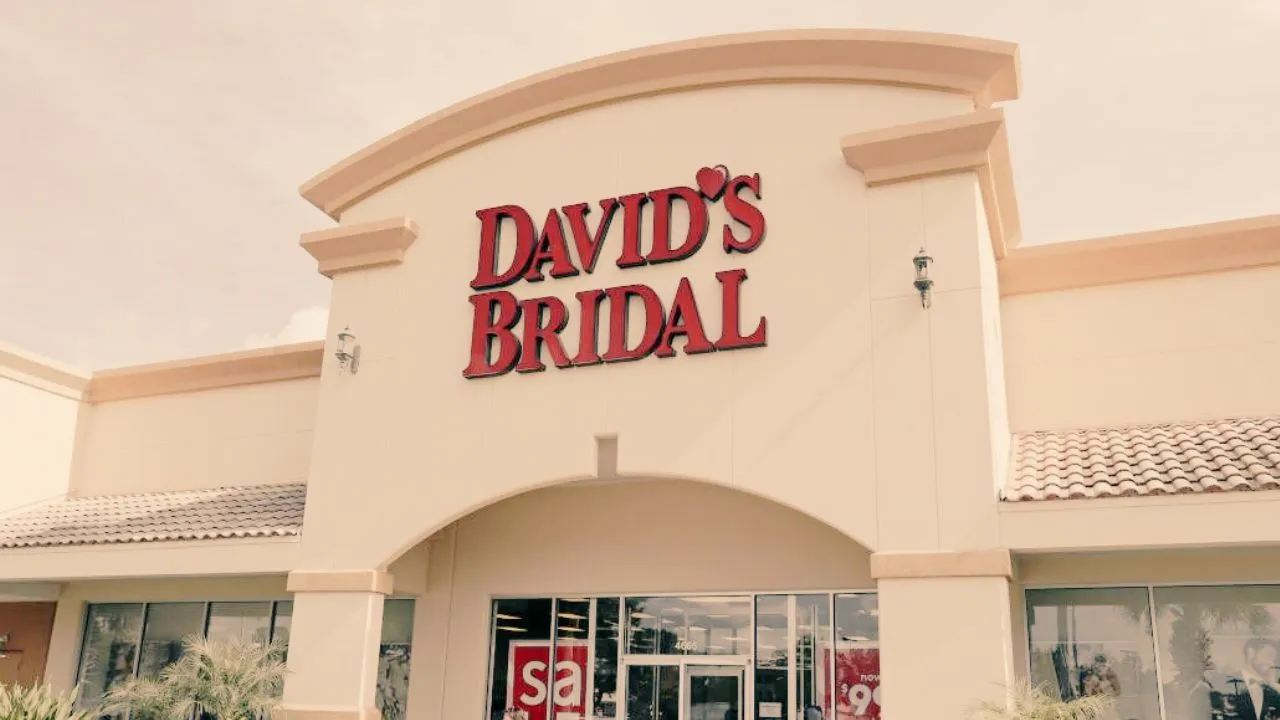
Headlines about mass layoffs, a second bankruptcy filing, and widespread store closures made it sound like David’s Bridal was finished for good. But the full picture is more complicated than those headlines suggested.
This article covers whether David’s Bridal is still operating, what the 2023 bankruptcy actually resulted in, how many stores are still open, and why the brand ended up in financial trouble twice.
David’s Bridal Is Not Fully Closed — But It Is Much Smaller
The short answer: David’s Bridal is still in business, but it looks very different from what it was two years ago.
In mid-2023, a bankruptcy judge approved a sale that kept the brand alive under new ownership. As of that sale, roughly 195 to 200 stores remained open, and the company continued selling online. That is a significant drop from the approximately 300 locations that existed before the April 2023 filing.
So this was not a total shutdown. But it was a major reduction. Some markets lost their local store entirely, which is a big reason the “going out of business” story spread so fast. If your nearest store closed, it probably felt like the brand was gone — even though it survived nationally.
What the 2023 Bankruptcy Filing Actually Meant
David’s Bridal filed for Chapter 11 bankruptcy in April 2023. It was the company’s second filing in five years — the first was back in 2018.
Chapter 11 is a reorganization tool, not an immediate shutdown order. When a company files for Chapter 11, it gets legal protection while it figures out a path forward. In David’s Bridal’s case, stores and the website stayed open during the proceedings while the company searched for a buyer.
At the time of the filing, the company carried approximately $257 million in debt and announced plans to lay off around 9,236 employees. Those numbers were alarming, and they generated a lot of scary headlines. But the stated goal was to sell the business as a going concern — meaning keep it running — not to liquidate everything and walk away.
That matters because it explains the gap between public perception and what actually happened. “Bankruptcy” reads as “closed” to most people. In retail, it often just means “restructuring under pressure.”
Why David’s Bridal Ended Up in Bankruptcy Twice
The 2018 bankruptcy reduced roughly $400 million in debt and secured $60 million in new financing. The company emerged from it in 2019. But it came out still carrying significant obligations and facing the same market pressures that caused the first collapse.
Several factors combined to push it into bankruptcy again.
A Heavy Debt Load From Private-Equity Ownership
Like many legacy retailers, David’s Bridal went through private-equity ownership that left it loaded with debt. That kind of financial structure limits how much a company can invest in updating its operations, improving its technology, or competing online. When sales start slipping, there’s very little cushion.
Changing Consumer Behavior
At its peak, roughly one in four U.S. brides wore a David’s Bridal dress. That is a remarkable market share for a single retailer. But consumer habits shifted. More brides started shopping online or at independent boutiques. Wedding styles moved toward smaller, less formal events — a trend that accelerated after the pandemic.
Fewer large, formal weddings means less demand for formal gowns. That cuts directly into David’s Bridal’s core business model.
Increased Competition
Fast-fashion retailers and big-box formalwear options also put pressure on the mass-market bridal segment. David’s Bridal built its reputation on affordable, accessible gowns in a large physical store format. When competitors started offering similar price points with easier online shopping, that edge eroded.
No single factor caused the second bankruptcy. It was a combination of structural debt, slower adaptation to e-commerce, and real demographic shifts in how people spend on weddings.
What Happened to Customer Orders, Gift Cards, and Alterations
This is the part that matters most to brides, prom customers, and wedding planners who had active business with David’s Bridal during the bankruptcy period.
Outstanding Orders
During the bankruptcy proceedings, the company publicly committed to fulfilling approximately 130,000 outstanding orders. Stores stayed open for alterations, returns, and exchanges under their existing policies while the restructuring was in process.
If you had an order placed before the April 2023 filing, the company’s position was that it would honor it. For anyone whose order was tied to a store that later closed, the practical step was to contact customer care directly and ask about shipping the order to a different location or arranging delivery.
Gift Cards and Store Credits
This is where things got messier. Community reports and case information indicated that some gift cards and store credits were cancelled during the proceedings. If you have an old gift card or store credit from before the bankruptcy, do not assume it still holds its full value. Contact the company directly to verify before trying to use it.
Advice If You Have an Active Order Right Now
If your wedding or event date is within weeks and you have an active order at a location that has closed or is at risk of closing, here are three practical steps:
- Confirm your order status directly with David’s Bridal customer care.
- Ask whether your order can be transferred to a nearby open location or shipped directly to you.
- Identify a backup off-the-rack option at another retailer, just in case. Do not wait until the last week.
Who Bought David’s Bridal and What That Means
The buyer was Cion Investment Corp, an asset management firm. The deal was approved by a bankruptcy judge in mid-2023. Notably, it was structured as a no-cash sale — meaning Cion took on the business and its remaining obligations rather than paying a traditional purchase price.
As part of the deal, roughly 7,000 of the company’s approximately 10,000 jobs were preserved, and the debt load dropped from around $257 million to roughly $50 million. That is a substantial reduction and gives the leaner company a much better chance of staying operational.
Whether that translates into long-term stability is a separate question. The structural challenges — online competition, shifting wedding trends, a smaller physical footprint — have not disappeared. But the company is in a better financial position now than it was at the time of filing.
For anyone tracking retail business trends, this situation is worth studying. David’s Bridal is a case study in what happens when a dominant legacy retailer carries too much debt, adapts too slowly to e-commerce, and faces demographic changes in its core customer base. Resources like Build Business Daily cover these kinds of business shifts in practical detail.
The Bottom Line
David’s Bridal is not gone. It is operating under new ownership with roughly 195 to 200 stores and an active online presence. But it is significantly smaller than it was, and some markets no longer have a local store at all.
The “going out of business” narrative spread quickly because bankruptcy filings, mass layoffs, and store closures all happened in a short window. The reality is that the brand survived — it just got a lot smaller in the process.
If you are a customer with an active order, check on it now. If you are watching this as a business story, the lesson is straightforward: heavy debt and slow adaptation to market changes will eventually catch up with even the most dominant retail brand.
Also Read: