
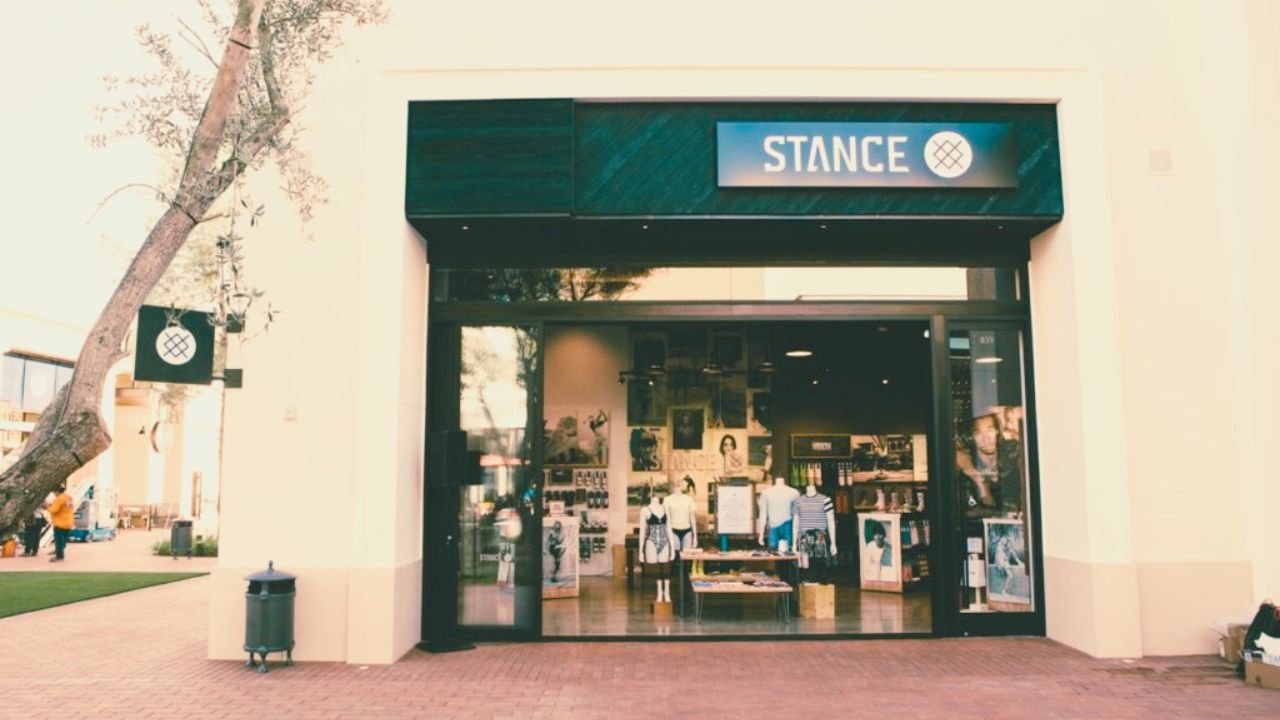
You walk past a Stance store at your local mall. Shelves empty. Doors locked. A sign gone from the window. It’s easy to assume the brand is finished — but that’s not quite what’s happening here.
Stance has not shut down, filed for bankruptcy, or disappeared. What it has done is go through a significant ownership change that’s reshaping how the brand operates. Here’s a clear breakdown of what actually happened and what it means for customers.
Stance Is Not Going Out of Business — But It Has Changed Significantly
Let’s answer the core question directly: Stance has not gone out of business. There are no bankruptcy filings, no liquidation notices, and the brand is not being dissolved.
In November 2025, Stance was acquired by Marquee Brands, a New York-based brand management company. This is a structural transformation, not a shutdown. The brand still exists — it just operates very differently now.
Marquee’s existing portfolio includes Martha Stewart, BCBG, Ben Sherman, and Body Glove. Those brands still sell products. They didn’t disappear when Marquee took over. Stance is now following the same path.
What Stance Was Before the Sale
Stance was founded in December 2009 in San Clemente, California. It started as a design-driven sock brand that stood out for its bold graphics and premium construction at a time when most socks were purely functional.
Over the years, it expanded into underwear and T-shirts for both men and women. It built real cultural credibility through collaborations with athletes and entertainers, and it grew into a recognizable name in the lifestyle and performance apparel space.
By most measures, it was a legitimate success story. Stance raised approximately $132 million in funding and operated in over 40 countries. It ran its own retail stores and sold directly to consumers online, functioning as an independent, vertically integrated brand with full control over its own identity and operations.
That independence is now gone.
What a “Licensed Brand” Actually Means for Stance
This is the part most people searching online won’t fully understand — and it matters a lot for how you interpret what’s happening.
Marquee Brands owns the Stance name and its intellectual property. But Marquee doesn’t run day-to-day operations. Instead, they license the brand out to other companies who handle the actual work.
For Stance, that company is United Legwear & Apparel Co. (ULAC), which has been appointed as the global Stance licensee in every country except China, where a separate licensee operates. ULAC is not a small outfit — it already produces socks and apparel under brands like Hurley, Puma, and Scotch & Soda.
Under this arrangement, ULAC handles design, production, wholesale, and distribution. Not Stance’s original team. The logo stays, but the organization behind it is fundamentally different.
A useful comparison: think of a car badge that survives under a new parent company. The name on the hood is the same, but the engineering team, the culture, and the people who built the original version may no longer be involved. That’s roughly what’s happened here.
Marquee describes itself as an “asset-light global brand accelerator.” That’s business language for: we own the name and grow it through partners, not through our own factories and stores. It’s a common model among brand management firms, and it has real consequences for what a brand looks and feels like over time.
Store Closures, Layoffs, and What Customers Are Seeing on the Ground
The closed mall stores and cleared shelves you may have noticed are real — and they are connected to this acquisition.
Stance-branded retail locations are being shut down as part of the post-acquisition restructuring. Reports from employee discussions, including conversations shared on Reddit’s r/StanceSocks community, indicate that staff at some locations confirmed closures were tied to the transition to Marquee and the licensing model. These are anecdotal, but they align with the broader picture.
Layoffs have also been part of the picture. When a brand shifts from running its own stores and operations to a licensed model, the original company’s workforce often shrinks significantly — in some cases, most of it goes away.
Here’s the distinction that’s easy to miss: store closures are not the same as brand closure. Stance losing its own retail footprint doesn’t mean Stance products stop existing. It means the way you buy them is changing. Owned stores are being replaced by wholesale and e-commerce channels run through ULAC’s distribution network.
If a store near you is running clearance sales or steep discounts right now, that’s consistent with this kind of transition — old inventory moving out before the licensed model takes full effect.
Will Stance Products Still Be Available — and Will They Be the Same?
Products are expected to remain available. ULAC has established wholesale relationships with major retailers, and Stance’s website is expected to continue operating under the licensee. If you want to buy Stance socks or underwear, you should still be able to find them.
Availability may actually expand in some channels. ULAC’s existing distribution network could put Stance into more retail doors than the brand previously reached on its own.
The harder question is about quality and identity. Licensing models don’t automatically ruin brands — but they do change them. When the original team, culture, and design leadership are replaced by a licensee focused on volume and margin, the products can shift in ways that are subtle at first and more obvious over time.
Some industry observers have been direct about this. An Arvin Goods newsletter titled “InfiKNITy Isn’t Forever. RIP Stance.” framed the sale as the end of the Stance they knew — not the logo, but the independent, innovation-driven company behind it. That’s a fair distinction to make. The brand will survive. Whether it retains the qualities that made it worth buying is a different question, and one that won’t be fully answered for some time.
ULAC does produce quality products for recognizable brands, so it’s not a guaranteed decline. But buyers who care deeply about the original Stance ethos should pay attention to how the product evolves over the next year or two.
Why Brands End Up in This Situation
Stance raised over $132 million in venture funding over its life as an independent company. That kind of capital comes with investor expectations — returns, growth, eventually an exit. By 2025, Stance faced the same pressures that have pushed many consumer brands toward acquisition: rising customer acquisition costs, slower DTC growth, and the difficulty of scaling a premium product in a competitive market.
Selling to a brand management firm like Marquee is a recognizable pattern in this industry. Companies like Marquee Brands, Authentic Brands Group, and WHP Global have built large portfolios by acquiring brand names and monetizing the IP through licensing — even when the original operating company shrinks or disappears entirely.
For readers following business trends, this is worth understanding. “Going out of business” used to mean a company shut its doors and stopped selling products. Today, it often means something more complicated: a brand name continues, but the people, culture, and original vision behind it have moved on. The label survives as a commercial asset, not necessarily as the thing fans originally connected with.
If you want to follow this kind of brand evolution more broadly, Build Business Daily covers the business side of consumer brands, acquisitions, and what ownership changes actually mean for companies and their customers.
What This Means If You’re a Stance Customer
A few practical takeaways depending on where you stand:
- If you love current Stance products: It may be worth picking up what you can while existing inventory is still available. The product you know now may not be identical to what comes out under ULAC’s production.
- If you’re a regular buyer who just wants the socks: You’ll likely still be able to find them online and through retail partners. The buying experience may shift, but the product line isn’t going away.
- If you’re concerned about returns or customer service: Watch for any communication from Stance about policy changes during the transition. Licensing shifts can affect how customer service is handled, and it’s worth checking directly with the brand if you have an open issue.
The Bottom Line
Stance is not going out of business in any traditional sense. It has been acquired by Marquee Brands and is transitioning to a licensed model operated by United Legwear & Apparel Co. The retail stores closing, the employees leaving, and the operational restructuring are all real — but they reflect a change in business model, not a brand disappearing.
What’s ending is Stance as an independent, founder-driven operating company. What continues is the Stance name, attached to products made and distributed by new operators under a brand management structure.
Whether that’s enough for long-time fans is a personal call. But for anyone who saw a dark storefront and assumed the worst — the brand is still alive. It just looks different behind the logo now.
Also Read: