
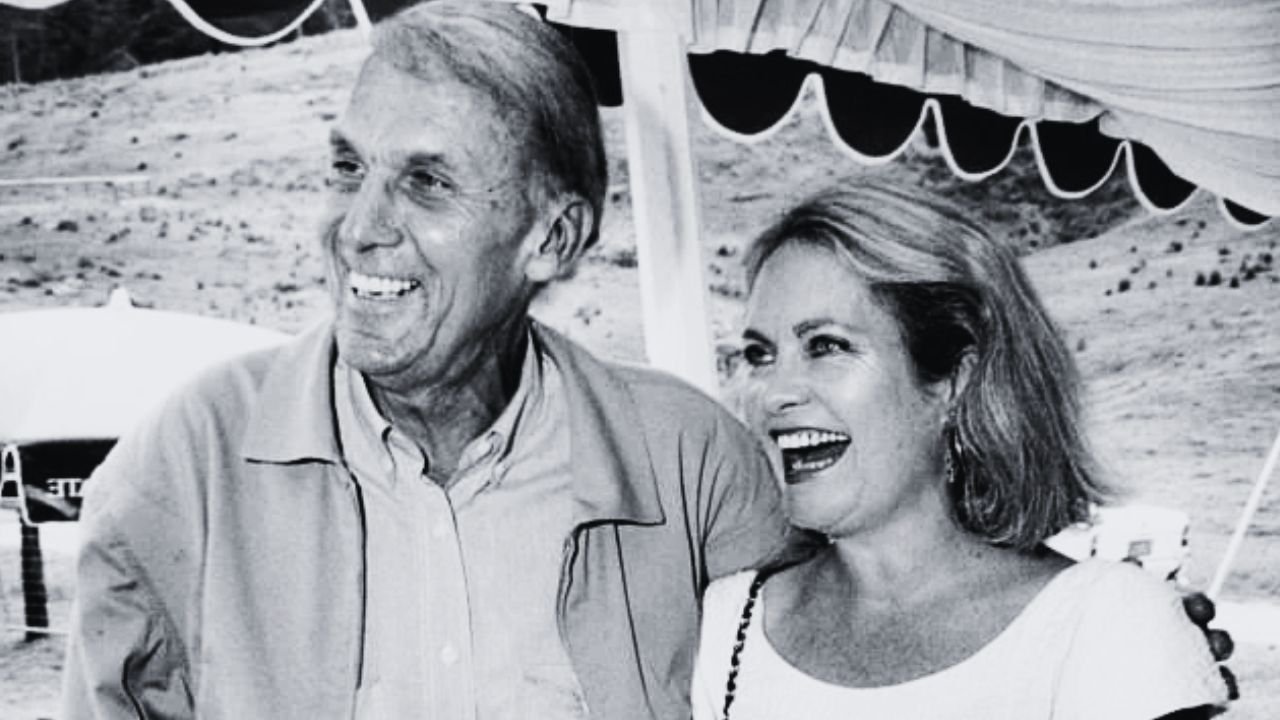
To millions of Australian radio listeners, the word “Princess” needed no explanation. For decades, veteran broadcaster John Laws referred to his wife Caroline on air with that single affectionate term. Listeners across the country came to know her through his words alone, even though she rarely stepped into the spotlight herself.
This article covers who Caroline Laws was, how she and John first met as teenagers, the separate lives they lived before finding their way back to each other, the family they built together, and her death in February 2020.
Who Was Caroline Laws?
Caroline Laws was born Caroline Cameron Waller. She became known publicly through her marriage to John Laws, one of Australia’s most recognizable radio voices. Outside of that connection, she lived a largely private life and did not pursue a public career of her own.
She was not a broadcaster, entertainer, or media personality in any formal sense. Her familiarity to John Laws’s audience came entirely from his on-air affection for her — a rare kind of quiet fame that belongs to private people loved by very public ones.
It is also worth noting that many unrelated people share the Laws surname across genealogy records and databases. This article refers specifically to John Laws’s wife within the context of their Sydney-based family life, identified by her confirmed birth name and the reporting around her death in 2020.
A Teenage Meeting in 1951
The story of Caroline and John begins at a dance in Sydney in 1951. At the time, Caroline was around 14 years old and John was approximately 16. By most accounts, it was a brief but memorable meeting for both of them.
What happened next was not a continuous love story. After that initial encounter, the two went their separate ways entirely. Caroline reportedly moved to London, where she pursued an interest in dance. John, meanwhile, took a different path — working as a jackaroo before eventually finding his way into radio broadcasting.
Their lives diverged completely for years. The 1951 meeting was simply a beginning that neither would have expected to circle back to decades later.
Separate Lives, Then a Reunion
During the years apart, both Caroline and John built separate lives and married other people. Caroline married a man named Dick Hagon, described in reports as a New Guinea planter. Together they had four daughters: Gabrielle, Georgina, Nichola, and Susie. That marriage eventually ended in divorce.
John Laws also married twice before Caroline came back into his life. By the time the two crossed paths again, both had been through significant chapters of life that the other had not been part of.
Their reunion, as reported in contemporary coverage, is said to have taken place at Luna Park’s “tunnel of love.” It’s a detail that sounds almost cinematic, though the exact circumstances are drawn from media reporting rather than any personal account from Caroline herself. What is clear is that when they found each other again, something that had been dormant since 1951 came back to life.
Their 1976 Marriage and Blended Family
Caroline and John married in November 1976. It was her second marriage and his third. By the time they wed, both carried full lives with them — including children from previous relationships.
Together, they formed a blended family of nine children. Caroline brought her four daughters — Gabrielle, Georgina, Nichola, and Susie — to the marriage. John also had children from his earlier marriages. The nine children were drawn from their combined histories, not born between the two of them.
This distinction matters. Reports about Caroline’s death described a large and close family, and the warmth of that coverage reflects the genuine bonds formed within a blended household rather than any assumptions about how the family was structured.
By all accounts, family life was central to Caroline and John throughout their marriage. The children and grandchildren that surrounded them over the years were a consistent presence in how both of them were described publicly in later life.
“The Princess” — Her Role in John Laws’s Public Life
John Laws was known for his commanding presence on Sydney radio. He broadcast for decades, drawing loyal audiences who followed his opinions, interviews, and conversations closely. Within that long career, one constant was the way he spoke about his wife.
He called her “the Princess.” Not occasionally — regularly, over many years, in a way that became familiar to anyone who listened to him long enough. It was a term of genuine affection, and it gave listeners the sense that they knew her even though she was never really a part of the program.
Caroline did not regularly speak on air, did not give interviews as a matter of routine, and did not seek recognition as a public figure. The nickname did not come from her own self-promotion. It came entirely from the way John chose to speak about her, week after week, year after year.
Their marriage lasted approximately 43 to 44 years, from November 1976 until Caroline’s death in February 2020. That span of time — covering decades of his broadcasting career — means that “the Princess” was a fixed point in the lives of listeners who had grown up with John Laws’s voice in their homes.
Caroline’s Death in February 2020
Caroline Laws died in February 2020 at the age of 82, following a battle with ovarian cancer. Reports indicate her illness had been ongoing for approximately four years before her death.
Her funeral was held in Sydney and attended by family members, close friends, and public figures. Among those present was actor Russell Crowe, who had a long friendship with the Laws family. His attendance was widely reported, though his connection to the family was one of friendship and neighborly closeness rather than any formal tie.
John Laws spoke publicly about Caroline’s death in terms that matched the way he had always described her — with deep devotion and something close to disbelief that she was gone. He described their story as “a beautiful love story,” a phrase that captured what their decades together had meant to him.
For many Australians who had listened to John Laws over the years, the news of her death felt personal in an unusual way. They had never met Caroline, but they had heard about her so many times that her absence felt real.
A Life Remembered Quietly
Caroline Laws was not a celebrity by any conventional measure. She did not hold a public role, build a media career, or seek attention beyond the life she shared with her husband and their large family. Her recognition came from someone else’s voice — a voice that chose, every time it had the chance, to speak about her with love.
That kind of legacy is easy to overlook. It doesn’t come with credits or headlines or a career summary. But for the people who listened to Australian radio for decades, the name “Princess” carried genuine meaning. It stood for a real person: Caroline Cameron Waller, who met a 16-year-old boy at a Sydney dance in 1951 and, eventually, became the woman he spent the rest of his life talking about.
If you enjoy profiles that look at the people behind public figures, BuildBusinessDaily covers stories that connect personal history to wider culture and legacy.
Caroline Laws died as she had largely lived — away from the cameras, surrounded by family, and known to the world mostly through the words of the man who called her his Princess for over four decades.
Read Also: