
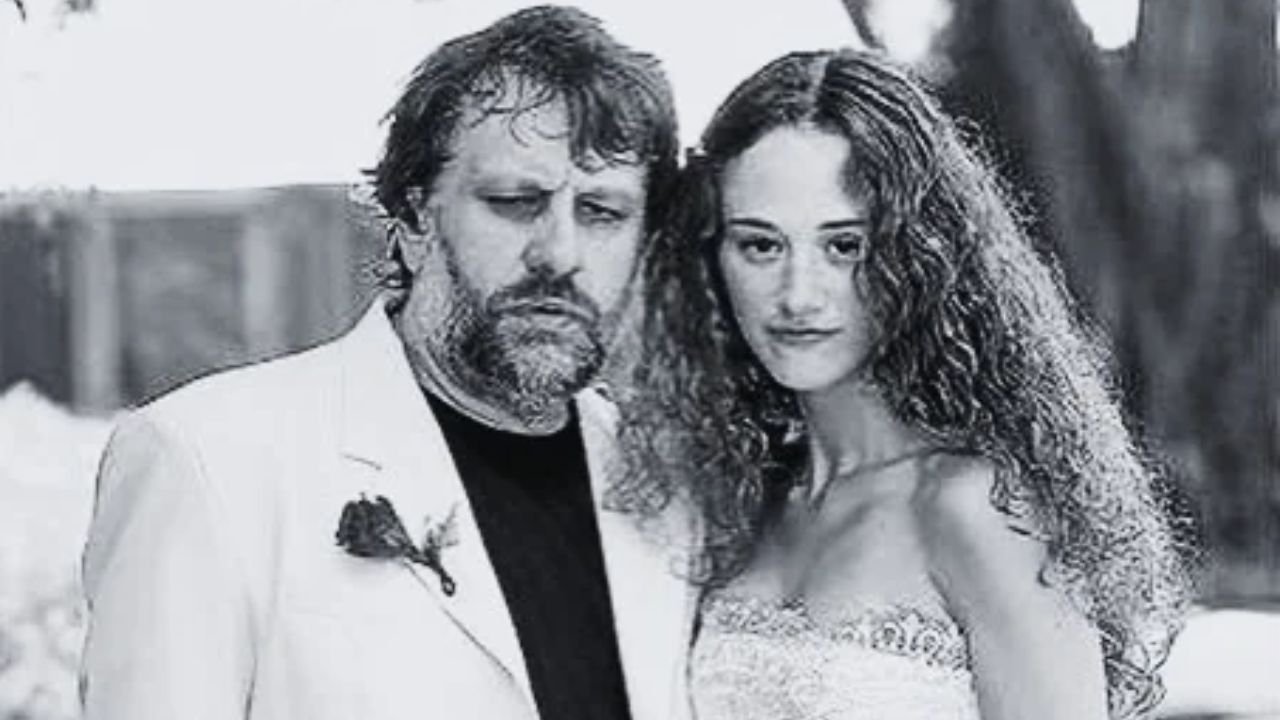
Her name shows up in biographies, search indexes, and genealogy databases. But despite that presence, almost nothing about Analia Hounie has been independently documented in public records. For most people, finding her name leads to more questions than answers.
This article covers what is actually known — and what is simply repeated without solid verification. That includes her reported connection to philosopher Slavoj Žižek, what secondary sources say about her background, and a clear separation between confirmed details and claims that remain unverified.
Who Is Analia Hounie?
Analia Hounie is a relatively private individual. She became publicly known almost entirely through her reported association with Slavoj Žižek, not through any independent public career or media presence.
Secondary sources describe her as Argentine. At least one account also describes her as a model at the time of the reported marriage. However, no authoritative independent biography, official profile, or primary source about Hounie has been widely published or cited.
It is worth being upfront about what this article can and cannot confirm. The description “Argentine model” originates from a secondary source — specifically, a text called Žižek’s Act by John Clark, available through anarchist libraries. It is not drawn from an official biography or primary record. So while that description gets repeated online fairly often, repetition is not the same as verification.
Hounie should be understood as a private figure with limited confirmed public information. What follows is an honest account of what has been reported, with sourcing clearly flagged.
Her Reported Marriage to Slavoj Žižek in 2005
The central reason readers search for Analia Hounie is her reported marriage to Slavoj Žižek. According to John Clark’s secondary source text, Žižek married Analia Hounie in 2005, at which time she was reportedly 26 years old.
This reported marriage is why her name appears in celebrity profiles, Žižek biographies, and online discussion threads. It is essentially the single data point that put her name into circulation.
That said, no official marriage certificate or primary record has been cited in widely available sources to independently confirm the specific details of the marriage. The claim has been repeated across commentary sites, Reddit threads, and biography-style pages — but wide repetition does not make something independently verified.
Readers encountering this detail elsewhere should know that it traces back to one secondary source. That does not necessarily mean it is false, but it does mean it has not been confirmed through public records or official documentation that researchers have cited.
Slavoj Žižek and Why His Personal Life Attracts Attention
To understand why Hounie’s name surfaces at all, it helps to understand who Slavoj Žižek is and why people find his personal life interesting.
Žižek is a Slovenian philosopher, cultural critic, and public intellectual with a large international following. His work covers ideology, psychoanalysis, Hegelian philosophy, politics, and popular culture. He has authored dozens of books and regularly appears in media, documentaries, and academic conferences worldwide.
His public persona is deliberately unconventional. He is known for blending high theory with pop culture references, speaking in a stream-of-consciousness style, and holding provocative public positions. That personality has made him a figure of genuine celebrity in academic and intellectual circles — and beyond them.
When someone like Žižek marries, people notice. Even if his spouse has no independent public profile, her name gets pulled into the same search space as his. That is simply how celebrity-adjacent searches work. Hounie’s name appearing in articles and databases is largely a reflection of Žižek’s visibility, not her own.
What Secondary Sources Say About Her Background?
Beyond the reported marriage, at least one secondary source makes a specific claim about Hounie’s family background: that her parents were Lacanian psychoanalysts.
If accurate, this would place her upbringing within a particular intellectual tradition — Lacanian psychoanalysis being a school of thought closely associated with the work of French theorist Jacques Lacan, and one that overlaps with Žižek’s own academic interests. Some commentators have found this detail significant or at least interesting in the context of the relationship.
However, this claim should be treated cautiously. It comes from the same secondary source — John Clark’s Žižek’s Act — and does not appear to be drawn from a primary record or verified through independent documentation. It has been repeated in online commentary, but as with the marriage details, repetition does not equal confirmation.
As for her nationality, available sources consistently describe Hounie as Argentine. No official documentation has been cited to confirm this, but it is at least consistent across different accounts.
Beyond those points, there is very little. No confirmed details about her education, professional career before or after the reported marriage, or current occupation appear in reliable public sources. If Hounie has maintained any kind of public profile after 2005, it has not been documented in sources that are widely available or easily verifiable.
Why Her Name Appears in Genealogy Databases?
Some readers come across Analia Hounie’s name through genealogy platforms like MyHeritage. It is worth explaining what those results actually mean — and what they do not.
Platforms like MyHeritage contain a mix of user-submitted family trees and historical records. When someone’s name appears in a search result on those platforms, it typically means another user has included them in a submitted family tree, or that a name match appeared in a scanned historical record of some kind.
That is not the same as a verified biography. A name appearing in a genealogy database result is not proof of parentage, marriage, nationality, or any other biographical detail. The underlying entry may be accurate, or it may contain errors — user-submitted family trees in particular can contain mistakes, unverified assumptions, or information drawn from other secondary sources.
If you have encountered Hounie’s name on a genealogy site and want to verify what it says, the right approach is to look at the specific record being cited, check whether it links to a primary document (like a birth record, marriage certificate, or official archive), and treat anything without that kind of backing as preliminary rather than confirmed.
For general guidance on navigating research that mixes confirmed facts with unverified background claims, resources like Build Business Daily can offer a useful framework for thinking critically about online information.
What Remains Unknown?
It is worth being direct about how much is simply not publicly available about Analia Hounie.
- Her current occupation or professional life is not documented in reliable public sources.
- Whether the reported marriage to Žižek continued, ended, or changed in any way is not confirmed in available sources.
- Details about siblings, children, or extended family have not been established through verifiable records.
- Her education background is not publicly documented.
- Her current location or public presence is not confirmed.
These gaps should not be filled with speculation. The absence of information about a private individual is not an invitation to guess. It is simply a limit on what can be responsibly reported.
A Realistic Summary of What Is Known
Analia Hounie is a private individual who became publicly known through her reported 2005 marriage to philosopher Slavoj Žižek. Secondary sources describe her as Argentine and, at the time of the marriage, as a model. One secondary source also claims her parents were Lacanian psychoanalysts.
All of these details come from the same secondary source — John Clark’s Žižek’s Act — not from primary records or official biographical documentation. They may be accurate, but they have not been independently verified through sources that are widely available.
Beyond these reported details, very little public information about Hounie exists. Her name surfaces primarily because of Žižek’s celebrity profile, not because she has sought public attention herself. That distinction matters when evaluating what you read about her online.
If you are researching her for academic, biographical, or personal reasons, the most honest thing to say is this: the confirmed public record is thin. What exists is worth noting, but it should be held lightly until better sources emerge.
Read Also: