
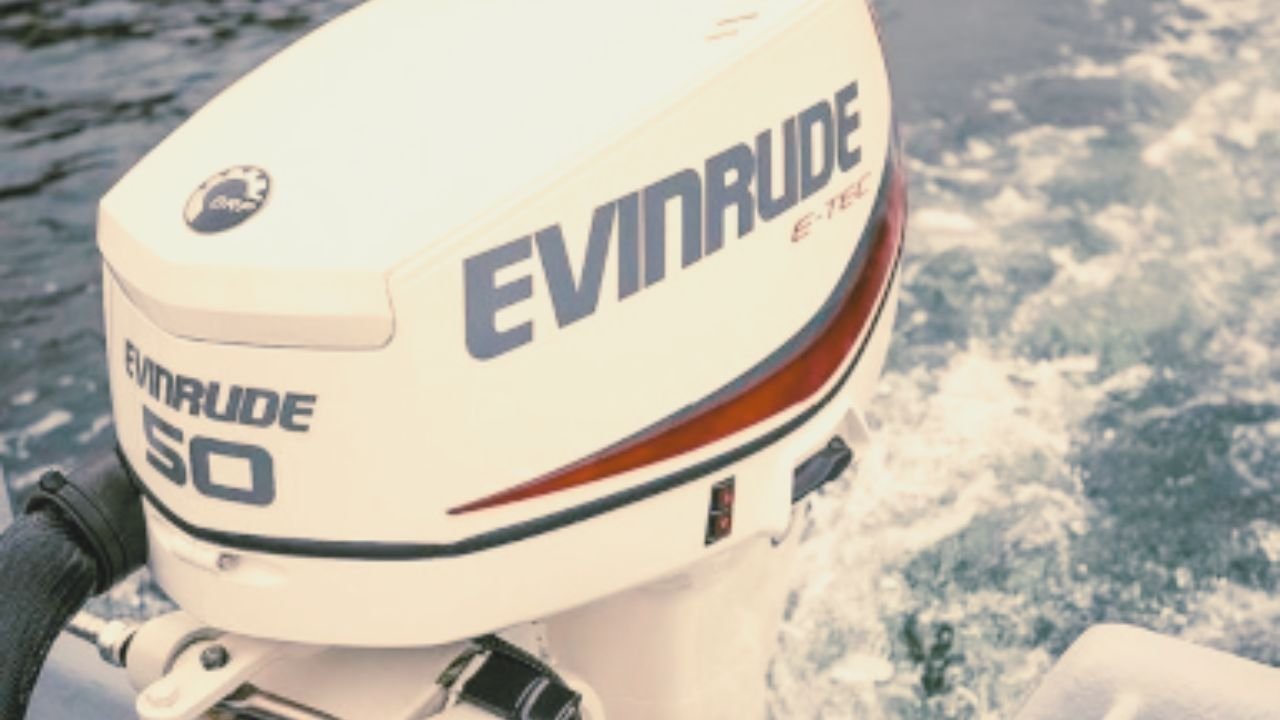
If you heard that Evinrude went out of business, you probably had one of two reactions. Either you panicked about the engine on your boat, or you wondered what it meant for that used boat you were thinking about buying. The reality is a little more specific than the headlines suggested — and more manageable too.
Here is what actually happened, why it happened, and what it means for anyone who owns or is considering buying an Evinrude-powered boat.
Evinrude Is No Longer Produced — But That Is Not the Same as Going Out of Business
On May 27, 2020, BRP announced it was permanently retiring the Evinrude brand and stopping all outboard engine production immediately. That is a big deal for the marine industry. But it is not the same as a company collapse.
BRP — Bombardier Recreational Products — is the parent company that owned Evinrude. BRP is still fully operational. It makes Ski-Doo snowmobiles, Sea-Doo watercraft, and Can-Am off-road vehicles, among other products. It is a large, diversified powersports company. What ended was one specific product line: Evinrude outboard motors.
Think of it like Pontiac or Saab. No new cars are being built under those names, but the parent companies survived, and owners were not left without support overnight. The brand is gone from showroom floors, but the support infrastructure does not vanish on the same day.
So to be direct: Evinrude outboard engines are no longer manufactured. BRP is not out of business.
A Brief History of Evinrude — and Why the Brand Was Already Struggling Before COVID-19
Ole Evinrude founded the company in Milwaukee in 1907, making it one of the oldest names in outboard motors. It went through a long ownership history, including decades under Outboard Marine Corporation (OMC), before OMC went bankrupt in 2000. BRP acquired the brand after that and kept it running for another two decades.
By the time BRP made its 2020 announcement, Evinrude was already in a difficult spot competitively. The outboard engine market had shifted heavily toward four-stroke engines. Yamaha, Mercury, Suzuki, and Honda had captured large portions of the market with four-stroke technology that consumers and dealers widely embraced.
Evinrude’s E-TEC and E-TEC G2 two-stroke engines were technically advanced and genuinely fuel-efficient. But they were competing in a market that had largely moved on from two-stroke motors, even highly engineered ones. Keeping up with emissions regulations, R&D costs, and manufacturing overhead for a shrinking market share was expensive.
BRP cited COVID-19 as a factor that was “too much to overcome the builder’s challenges.” That phrasing matters. It implies the challenges already existed. COVID-19 was the final strain, not the sole cause.
Parts, Service, and Warranties — What BRP Has Committed To
This is the most practical question for current Evinrude owners: are you stranded?
The short answer is no — at least not right now. BRP officially committed to continuing parts supply and honoring warranties for existing Evinrude engines after the 2020 shutdown. Their owner FAQ page and dealer/service locator remain active. That is not nothing.
Many independent marine mechanics still service Evinrude engines because there is a large installed base out on the water. Some dealers dropped the brand from their showrooms but continue to service it at the shop level. The engine did not become a museum piece the day BRP made the announcement.
That said, there is a real long-term risk worth acknowledging. No new engines are being produced, which means the parts supply will gradually tighten over years as the installed base ages. This is not an immediate problem, but it is a slow-moving one.
If you own an Evinrude engine today, here are a few practical steps worth taking now rather than later:
- Verify your warranty status and note your engine serial number.
- Stock key maintenance items like filters, spark plugs, and anodes.
- Confirm that a local dealer or independent mechanic can service your engine.
- Do not wait until something breaks to find out whether support is available in your area.
None of this is urgent. But taking stock of your situation now gives you more options than discovering a gap when you actually need service.
How the Discontinuation Affects Resale Value and Used-Boat Purchases
If you are selling a boat with an Evinrude motor, expect buyers to use the discontinued brand as a negotiating point. That is fair from their side, even if your engine runs perfectly. The perception of uncertainty around parts and service will affect what people are willing to pay, regardless of the actual condition of the engine.
If you are buying a used boat powered by an Evinrude, the picture is more nuanced. The lower price can be a genuine advantage if you go in with clear eyes. Here is how to think through it:
The Case For Buying
- Evinrude E-TEC engines have a strong reputation for fuel efficiency and performance.
- The lower purchase price can offer real value if you plan to keep the boat for several years.
- Parts and service are still available through BRP and independent mechanics.
The Case For Caution
- When it comes time to sell, you will face the same discount you benefited from buying.
- The pool of buyers willing to take on a discontinued brand is smaller.
- Long-term parts availability will gradually become a real issue, even if it is not one today.
Before buying, do your due diligence. Check engine hours, ask for service records, get a compression test done, and verify that a mechanic near you can service the engine. These are steps you should take with any used engine purchase, but they matter more here.
What BRP Is Doing Instead — and What It Means for an Evinrude Comeback
After retiring Evinrude, BRP shifted its marine focus toward boat brands rather than engines. It owned Alumacraft, Manitou, and the Telwater group (which includes brands like Quintrex and Yellowfin) and planned to pair those boats with engines from other suppliers like Mercury.
Then, in October 2024, BRP announced it was initiating a process to sell its marine businesses entirely. Alumacraft was sold to Brighton Marine Group. Telwater was sold to Yamaha Motor Australia. BRP appears to be stepping further back from marine hardware altogether, not just outboard engines.
That context matters if you are wondering whether Evinrude could come back. In theory, a brand name can be sold and revived by another company. But there is currently no credible indication that anyone is doing that. BRP’s broader retreat from marine assets makes a revival under their ownership even less likely. And the brand’s commercial value has diminished significantly since 2020.
Could someone buy the Evinrude name and restart production someday? It is not impossible. But it is not something you should plan around right now.
For more practical business analysis like this, visit Build Business Daily.
What Should You Actually Do?
If you already own an Evinrude engine that is in good shape, there is no urgent reason to re-power. BRP support is still there, and a well-maintained E-TEC engine can serve you reliably for years. The question of re-powering becomes more relevant as the engine ages and if local service options start to thin out in your area.
If you are considering a used Evinrude-powered boat, weigh the discount against your timeline. A lower entry price on a boat you plan to use for five or more years may make sense. If you are thinking about reselling within two or three years, the discount you get today may not fully offset the discount you will offer the next buyer.
Either way, the decision should come down to the specific engine, the price, and your local service options — not just the headline that Evinrude is “out of business.”
The Bottom Line
Evinrude outboard motors are no longer being made. That is a permanent decision by BRP, not a temporary pause. The brand ended in May 2020 after more than a century in the outboard market.
But BRP still exists, still supports existing engines, and has not left owners without options. Parts are still available, warranties were honored, and mechanics still work on these engines. The concern is long-term and gradual, not immediate.
If you own one, take care of it and plan ahead. If you are buying one, do the homework and price it right. The engine did not become worthless in 2020 — it just became a different kind of purchase decision.
Also Read: